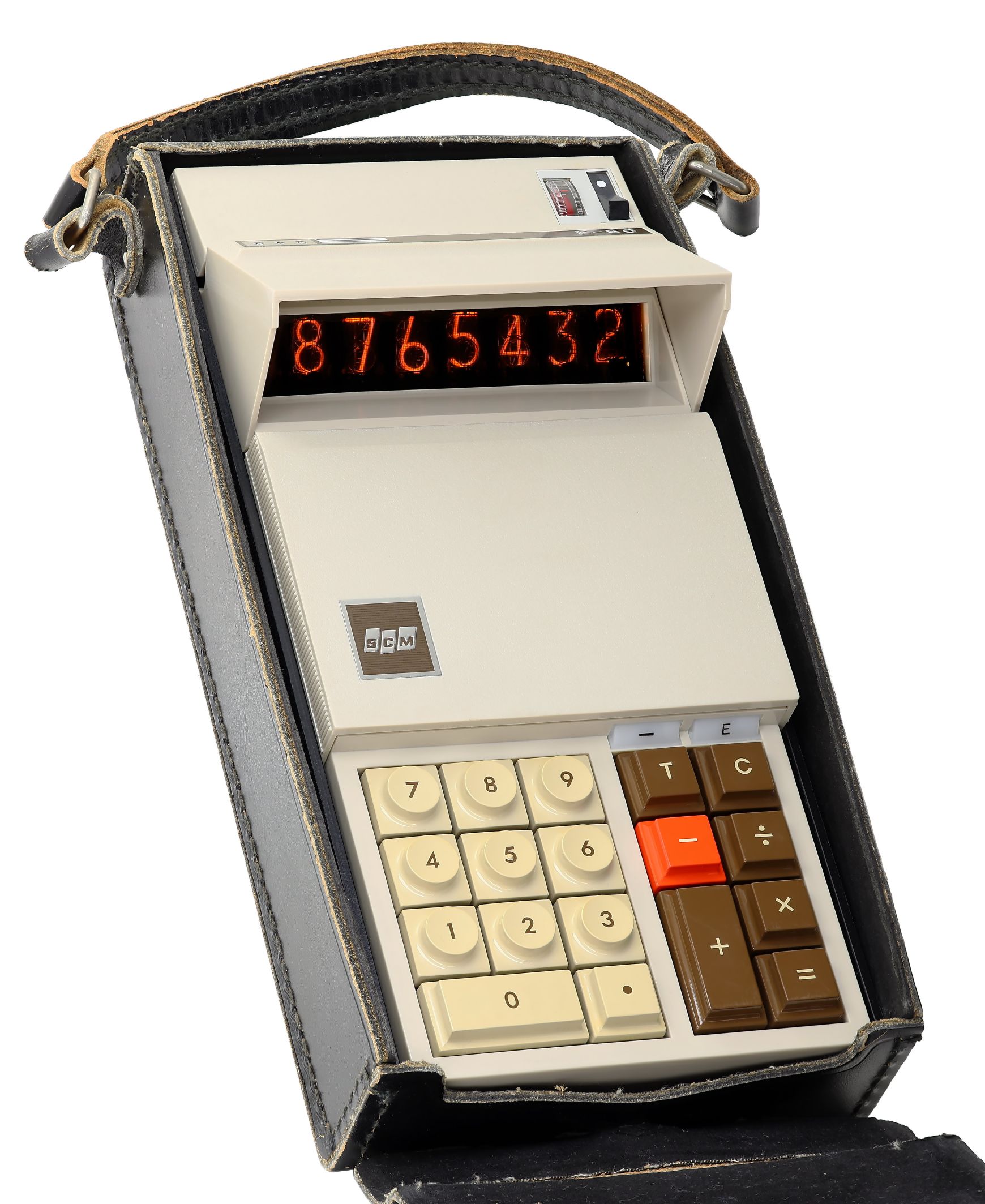
If you have ever wondered when nixie tubes were invented, the short answer is: they emerged as a commercial display technology in the mid-1950s. The name “Nixie” came from Burroughs, and the format became one of the most recognisable cold-cathode numeric displays of the pre-LED era. Early Nixie displays were introduced by Burroughs in 1955, and the technology went on to appear in test equipment, calculators, counters, industrial instruments, and many other electronic devices before later display technologies began to replace it.
The beginning: Burroughs Nixie tubes
Any serious look at Nixie history starts with Burroughs Nixie tubes. Burroughs not only popularised the format, but also owned “Nixie” as a trademark. The company’s catalogues described NIXIE indicator tubes in multiple size classes intended for different viewing distances, which helps explain why collectors today encounter everything from compact numeric tubes to much larger statement pieces. Over time, Nixie displays has expanded beyond simple numerals into more specialised and even alphanumeric variants, which is one reason the format still fascinates engineers, collectors, and designers.
What made Nixie tubes special was not just that they glowed, but how they glowed. Each digit was a shaped cathode stacked behind the others, creating a layered, almost theatrical look that LEDs and LCDs never truly replaced. That sense of depth became part of the Nixie identity. It is also why the technology still feels so sculptural today, whether it appears in a laboratory instrument, a vintage tube clock, or a museum-worthy display piece.

Nixie tubes sizes: why scale matters
A proper nixie tube size comparison reveals that size has always shaped the character of a clock. Engineering references note that Nixie displays ranged from miniature tubes of roughly 8 mm digit height to extra-large examples around 100 mm, while Burroughs itself offered five basic size classes. In Soviet and Eastern European families, common sizes included small IN-17 tubes at 9 mm, IN-16 at 13 mm, widely used IN-14 at 18 mm, and the much larger IN-18 at 40 mm. In other words, discussions about nixie tube sizes are not just about dimensions; they are about readability, viewing distance, rarity, and the overall personality of the finished object.
For collectors and makers, this difference in scale changes everything. A compact tube can feel technical and intimate, while a large tube becomes architectural. That is why the same technology can work equally well in a desktop instrument, a six-tube statement clock, or a dramatic gallery-style display. The most common Soviet types, such as IN-8, IN-12, and IN-14, became popular partly because they were relatively easy to obtain, while larger tubes, such as IN-18, earned their reputation for delivering much greater visual impact.
The Soviet era and the rise of the collector market
For many enthusiasts, the heart of the hobby lies in the Soviet family of tubes. A classic soviet clock often uses IN-8, IN-12, or IN-14 tubes, while more premium builds aim for the imposing IN-18. References that track Soviet types show how broad that ecosystem became: compact numeric indicators, symbol tubes, miniature formats, and larger display tubes all existed within the same broader tradition. This variety is one of the reasons Soviet-era tubes continue to dominate the enthusiast market today.
The IN-14 became one of the best-known choices because its 18 mm digits offered a strong balance of size, availability, and cost. By contrast, the IN-18 moved into a more dramatic category with 40 mm digits, making it far more striking from across a room. That difference still defines how people choose a Nixie clock now: some want the compact charm of a smaller tube, while others want something oversized, theatrical, and impossible to ignore.

From old instruments to the old clock radio and nixie watch revival
Historically, Nixie tubes were used in instrumentation, counters, calculators, and technical readouts rather than as pure décor. But in the modern revival, the aesthetic has migrated into objects that are much more emotional and lifestyle-driven: the vintage tube clock, the retro old clock radio concept, and even the nixie watch. Engineering history references note that retro builders have repurposed Nixie displays into clocks, wrist watches, and even AM-radio-inspired projects, which shows just how far the format has moved from lab equipment into design culture.
That shift matters because it changed what people expect from a Nixie product. A display tube is no longer judged only by technical function. It is also judged by silhouette, depth, glow quality, and how convincingly it translates vintage electronics into a modern interior. This is exactly where design-driven makers and new-production tubes become important.
Nixie tube replacement: why new production matters
One of the biggest questions in today’s market is nixie tube replacement. Vintage stock is finite. Many original tubes are decades old, increasingly expensive, and uneven in condition. That makes replacement difficult for collectors, builders, and brands that want long-term consistency. New-production tubes solve that problem by making the format usable again, not just collectable. Millclock explicitly positions its modern tubes as hand-engineered, hand-assembled, and tested in Ukraine, while describing ZIN18 as a reliable alternative to ageing vintage stock.
This is where the story becomes especially interesting. Instead of relying only on NOS inventory, modern manufacturers can reinterpret historical formats and improve durability, consistency, and integration. For customers, that means a better path for nixie tube replacement and a more dependable foundation for clocks, installations, and custom builds.

ZIN18: a modern answer to the large-digit format
Millclock’s ZIN18 sits in a very clever place within the Nixie landscape. According to Millclock, it was designed as a newly manufactured tube inspired by historical forms, but reworked for modern precision and better reliability. The company describes the ZIN18 as a “Reborn” concept with elongated 44 mm digits, giving it a size larger than classic IN-18 numerals while still keeping the overall presentation more compact and refined than giant-format tubes. Millclock also frames it as a fresh alternative to rare vintage components for collectors, designers, and engineering projects.
That makes ZIN18 especially strong for buyers who want a meaningful nixie tube size comparison outcome: larger, more legible digits than many common Soviet tubes, but without jumping all the way into the monumental category. Visually, it bridges the world of collectable nostalgia and contemporary product design. For a premium vintage tube clock aesthetic with more discipline and consistency, it is a very persuasive format.

ZIN70: giant scale for modern collectors
If ZIN18 is the balanced modern format, ZIN70 is the full statement piece. Millclock’s published specifications describe it as a giant new-production Nixie tube with roughly 70 mm digits, a glass envelope about 150 mm tall, and a diameter of around 58 mm, using a Z568M-compatible round pinout. On the company’s current pages, ZIN70 is presented as one of the largest new-production Nixie formats available today, built for high-end clocks, large rooms, installations, and visually dominant display pieces.
In practical terms, ZIN70 answers a demand that vintage markets cannot easily satisfy anymore: very large digits, repeatable quality, and a modern supply path. In aesthetic terms, it belongs to the lineage of oversized historical tubes but translates that heritage into a product made for today’s collectors, architects, and designers. If someone wants a true centrepiece rather than a small desk object, ZIN70 occupies that role with unusual clarity.

Why this history still matters
The reason Nixie tubes remain relevant is not only that they are old. It is that they represent a branch of display technology where engineering is visible. You can see the digits stacked in depth. You can see the glow form around the active cathode. You can see the object working. That is why the history of Burroughs Nixie tubes, Soviet classics, and modern reinterpretations still resonates today. From the question of when nixie tubes were invented to the practical need for nixie tube replacement, the story is really about how a discontinued technology became a living design language again.
For Millclock, that story leads naturally to ZIN18 and ZIN70. One tube represents a refined modern large-digit format; the other pushes scale into a new-production giant category. Together, they show that Nixie design did not end with old stock. It evolved. And for collectors comparing nixie tubes sizes, dreaming of a new soviet clock-inspired build, restoring a vintage tube clock, or simply looking for the right modern replacement, that evolution is exactly what makes the category exciting again.


