A Nixie clock is not just a digital clock with glowing numbers. At least, a real one is not. When people first see the price of a genuine Nixie tube clock, they sometimes wonder why it costs more than a normal desk clock or a modern LED display. The answer is simple: a real Nixie clock is a mix of rare display technology, careful engineering, premium materials, and a lot of hands-on work.
It is not mass-produced like ordinary electronic gadgets. A good Nixie clock is closer to a crafted object than a simple device. It shows time, but it also brings atmosphere, history, and character into a space.
Real Nixie Tubes Are the Heart of the Clock
The most significant difference starts with the tubes.
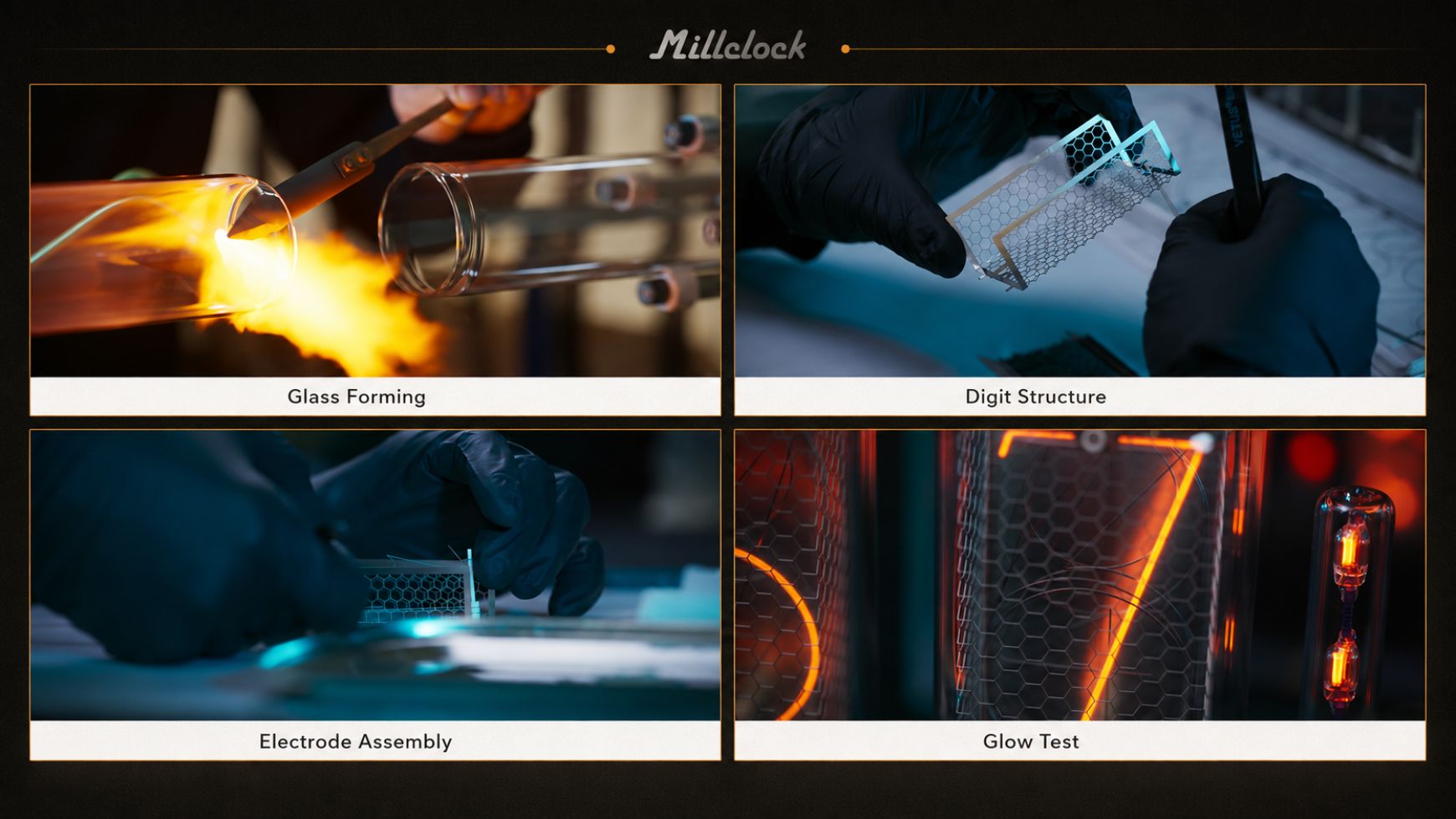
A real Nixie tube is a glass display tube filled with gas. Inside it, there are separate metal digits shaped like numbers. When voltage is applied, one digit lights up with a warm orange glow. This is not a screen effect. It is a real physical glow inside the glass.
That is why genuine Nixie tubes are special. They have depth, small imperfections, reflections, and a character that LED or IPS displays cannot fully copy.
The cost of a Nixie clock depends heavily on the tubes themselves. Some tubes are vintage and limited. Others are newly produced in small quantities, which also requires complex work. The larger the tubes are, the more difficult and expensive the clock becomes. Large tubes need more space, stronger visual balance, and more careful engineering.
Materials Matter More Than People Think
A premium Nixie clock is not only about the tubes. The case, base, glass cover, metal parts, buttons, connectors, and finishing all affect the final price.
Cheap clocks often use simple plastic or basic cases. A high-quality Nixie clock usually uses materials such as aluminum, glass, brass details, wood, or carefully finished metal. These materials do not only look better. They also make the clock feel more solid and permanent.
When you place a Nixie clock on a desk or shelf, you notice these details immediately. The weight, the reflections, the smooth edges, and the way the tubes sit on the base—all of this creates the feeling of a serious object rather than a small electronic toy.
Craftsmanship Takes Time
One of the main reasons a real Nixie clock is expensive is the amount of manual work involved.
The tubes must be installed carefully. The electronics must be assembled and checked. The case needs to be prepared, cleaned, fitted, and finished. The glass cover must sit properly. Every detail has to work together.
This process is very different from buying a simple digital clock made by the thousands on an automated production line. A handmade Nixie clock takes time, attention, and experience. Small mistakes can affect not only the appearance but also the reliability of the clock.
That is why craftsmanship matters. A beautiful Nixie clock should not only look good in photos. It should feel right when you touch it, turn it on, and live with it every day.
Electronics and Reliability Are Also Part of the Price
A Nixie clock may look vintage, but inside it needs modern electronics to work safely and reliably.
The clock has to control the tubes, keep accurate time, manage brightness, and sometimes support features such as night mode, Wi-Fi setup, or automatic digit cycling. These functions are not just extras. They help make the clock more comfortable to use and can also support the long-term life of the tubes.
Good electronics are invisible when everything works well. But they are one of the most important parts of the clock. A cheaper clock may look attractive at first, but poor electronics can lead to unstable brightness, unreliable operation, or a shorter useful life.

Testing Is Part of the Value
A serious Nixie clock should be tested before it reaches the customer.
The tubes need to be checked. The display should be stable. Buttons, settings, power supply, and brightness behavior should work correctly. The clock should be packed safely, especially because glass tubes are delicate.
This testing process takes time, but it reduces problems later. For a premium object, this step matters. A Nixie clock is often bought as a gift, a collector’s piece, or a centerpiece for a workspace. It should arrive ready to impress.
You Are Paying for More Than Timekeeping
A normal clock tells time. A Nixie clock creates a feeling.
It adds warm light to a room. It brings a sense of vintage technology into a modern interior. It becomes a conversation piece. People notice it because it does not look like every other device on the desk.
This emotional value is part of the price too. A real Nixie clock is not only about function. It is about presence.
The Millclock Approach
At Millclock, we build real Nixie clocks for people who appreciate authentic tubes, refined materials, and careful craftsmanship. Our goal is not to make a clock that simply displays numbers. The goal is to create an object that feels lasting, atmospheric, and meaningful.
Compact models like the ZIN18 bring a real Nixie glow to a desk or shelf setup. Larger models like ZIN70 create a stronger visual statement and a deeper sense of presence in the room.
In both cases, the value comes from the same things: real tubes, real materials, real glow, and real attention to detail.
Final Thoughts
So, why are Nixie clocks expensive?
Because a real Nixie clock is not just a clock, it is also a work of art. It is glass, metal, gas, electronics, design, assembly, testing, and craftsmanship brought together into one object.
An LED clock can show the time. A real Nixie clock gives time a physical form.
That is what makes it special—and that is what makes it worth more.


