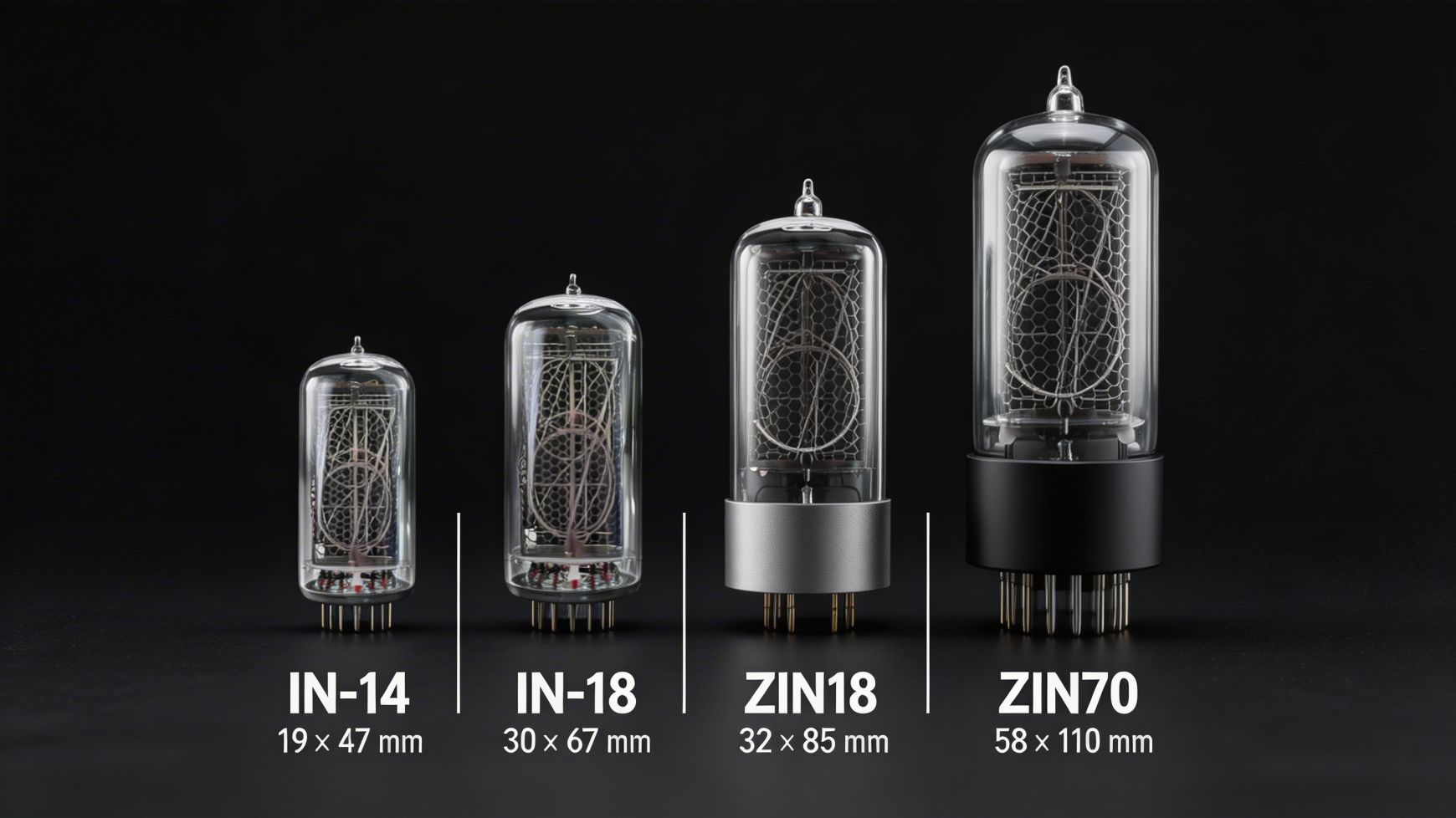
IN-14, IN-18, ZIN18 and ZIN70 Compared
Anyone who gets into Nixie tubes eventually starts asking the same questions: which size feels right, which type has the strongest presence, and which tube best fits a particular style or project? That is exactly why models like IN-14, IN-18, ZIN18, and ZIN70 are so interesting. Each one represents a different scale, a different mood, and a different way of experiencing the unique charm of Nixie technology.
IN-14: the balanced classic
The IN-14 is one of the best-known Soviet Nixie tubes, and for good reason. It offers a very pleasing balance between size, readability, and classic character. Because of that, it has become a favorite for Nixie clocks that are meant to feel traditional, elegant, and still relatively compact.
Why the IN-14 remains so popular
What makes the IN-14 so appealing is its balance. It has enough visual presence to give a clock real personality, but it is not so large that the design starts to feel heavy or oversized. For many collectors and makers, it sits in that perfect middle ground where classic Nixie aesthetics and everyday usability come together.
IN-18: the large Soviet statement tube
The IN-18 is a very different experience. Larger, bolder, and far more dramatic, it is often seen as one of the most impressive premium options among vintage Soviet tubes. It naturally draws attention and works especially well in clocks that are designed to stand out rather than quietly blend in.
What makes the IN-18 special
Compared to the IN-14, the IN-18 feels more open, more powerful, and much more visually commanding. It is the kind of tube people choose when they want the historic Soviet Nixie look, but in a format that feels more expressive and unforgettable.
ZIN18: a modern interpretation with refined presence
Millclock’s ZIN18 takes the idea of a large Nixie tube and brings it into a modern, newly manufactured form. It keeps the emotional appeal of vintage tubes, but presents it with more precision, more consistency, and a more contemporary sense of elegance.
Who the ZIN18 is for
The ZIN18 is a strong choice for people who love the atmosphere of classic Nixie tubes but want something fresher and more modern. It feels premium, well controlled, and visually confident without becoming overwhelming. In many ways, it offers a bridge between vintage inspiration and modern design.
ZIN70: maximum scale and visual impact
The ZIN70 is built for presence. It is a much larger and more dramatic format, created for projects where scale, readability, and visual impact matter most. This is not a subtle tube. It is a centerpiece.
Why the ZIN70 stands apart
For anyone looking for a Nixie tube that becomes the heart of the entire design, the ZIN70 offers something exceptional. It takes the fascination of traditional tube technology and transforms it into a modern large-format statement. The result feels bold, architectural, and unmistakably premium.
Size comparison: which tube fits which style?
IN-14, IN-18, ZIN18, and ZIN70 differ not only in size, but also in the kind of visual experience they create. The IN-14 feels classic and balanced. The IN-18 feels historic and powerful. The ZIN18 brings a more refined modern elegance, while the ZIN70 delivers maximum presence and almost sculptural impact.
How to choose the right Nixie tube
The best choice depends on what kind of personality you want your clock or project to have. Some people want something compact and classic. Others want something larger, more historic, or more visually dominant. That is why comparing these models matters so much for collectors, designers, and anyone looking for a truly distinctive Nixie clock.
Classic tubes and modern evolution
Looking at IN-14, IN-18, ZIN18, and ZIN70 together shows just how much the world of Nixie tubes has evolved. Historic models still shape the imagination of collectors, but modern new-production tubes open the door to new levels of quality, availability, and design freedom.
Why this evolution matters
Part of the magic of Nixie tubes is that they are not frozen in the past. Their appeal continues because they can evolve. That is the real strength of modern models: they preserve the spirit of historic tubes while translating it into something that still feels relevant, desirable, and beautiful today.


