Imagine looking up from your desk at 10:24. A four-digit Nixie clock shows 10:24 and leaves it there until the minute changes. A six-digit Nixie clock might show 10:24:36. Glance back a second later and the last tube has already changed. On paper it’s two extra digits. In the room, that movement is often what you notice first.
When four digits are enough
Hours and minutes are all most of us need to know if it’s time to leave or if a meeting is about to start. A four-digit display changes less often, which can make it easier to ignore next to a monitor. It may also take up less room. Check the base dimensions rather than counting tubes, though: four large tubes can make a wider clock than six small ones.
Why choose a six-digit Nixie clock?
If you like watching the numbers change, give the seconds their own pair of tubes. The last digit changes every second; the one next to it changes every ten. You can also see how many seconds are left before the next minute without reaching for your phone. From further away, look at the size and spacing of the digits. A six-digit display is easy to follow when your eye can pick out the three pairs.
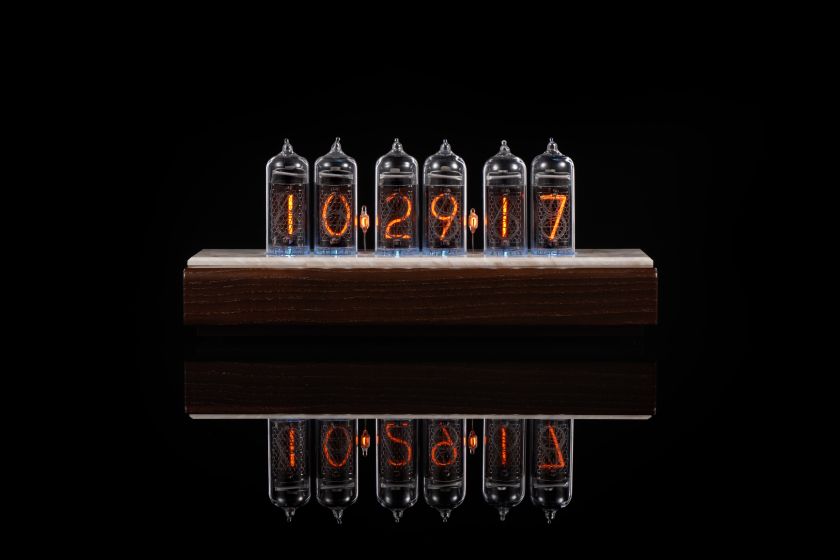
A Millclock IN-14 with six tubes. Each pair shows hours, minutes or seconds.
What to check before you pick one
Measure the space you’ll actually use, including clearance for the power cable. Think about where you’ll read the time from, and whether a changing digit will bother you at the edge of your vision. If you want seconds but don’t have a wide shelf, compare base widths first. The six-digit Millclock IN-14 Nixie clock is one place to start. You can compare tube sizes in our IN-14, IN-18, ZIN18 and ZIN70 guide.


